Road service in Las Vegas, NV
A truck can run all morning perfectly and quit at the worst possible moment.
Maybe you are on I-15. Maybe you are leaving Las Vegas for another delivery. Then a tire goes flat, an engine warning appears, or the truck simply refuses to start.
Look, we get it. A breakdown is stressful enough.
Without trying to figure out who can actually help. That is where road service matters.
Road service in Las Vegas brings roadside assistance to the vehicle instead of making every breakdown start with a trip to a repair shop. Depending on the problem, a mobile technician may diagnose the issue and complete a practical repair at the location.
Sometimes the fix is simple. Other times, it is more complicated than it sounds. The important part is knowing what happened and choosing the safest next step.
Road service that focuses on the actual problem
Road service can cover different situations. The right response depends on the vehicle, the breakdown, and where the vehicle has stopped.
For commercial drivers, common roadside problems can include tire issues, starting problems, electrical faults, air system problems, cooling concerns, fuel problems, and trailer issues.
A good service provider should also be clear about what can be handled roadside and what may require towing or shop repair. We believe strongly that this distinction matters. Nobody benefits from promising an on-site repair before anyone has looked at the problem.
Need the truck brought in after the roadside call? See our mobile truck repair in Las Vegas.
- Where is the truck?
- Can it move?
- What warning lights appeared?
- Is the trailer affected?
- Is it in a travel lane?
Those details matter.
What does road service in Las Vegas include?
Now, you might be wondering what roadside service actually covers. Well, it depends on the vehicle and the provider. Road service for commercial vehicles can involve several types of assistance, including:
- Truck roadside assistance
- Semi truck breakdown assistance
- Trailer roadside service
- Tire-related problems
- Battery and starting issues
- Electrical diagnosis
- Air system problems
- Cooling system concerns
- Fuel-related problems
- Minor mechanical repairs
- Mobile diesel repair
- Emergency vehicle checks
Not every problem can be repaired beside the road. That is important.
A technician may find that a vehicle needs specialized equipment, replacement parts, or a controlled shop environment. In that situation, towing or recovery may be the safer option.
The goal is not to force every repair into a roadside setting. The goal is to get the vehicle assessed properly and choose the next step based on the actual problem.
Common truck problems on Las Vegas roads
Las Vegas creates some conditions that deserve extra attention. The National Weather Service describes Las Vegas as having hot summers, with temperatures commonly reaching triple digits. Its climate data also shows July and August have normal average maximum temperatures above 100°F.
That heat makes basic checks especially important — tires, cooling systems, hoses, belts, batteries and air conditioning. A warning light should not automatically be treated as a minor issue either. Most of the time, it is telling you something useful.
Tire problems
A damaged or failed tire can stop a commercial vehicle quickly. Roadside tire assistance may involve inspecting the tire, identifying the problem, and determining whether repair or replacement is appropriate.
Avoid working around moving traffic whenever possible.
Starting & battery
A truck that will not start can have several possible causes. The battery may be weak. The electrical system may have a fault. Another component may also be responsible.
Simply replacing a battery does not always solve it.
Cooling problems
Overheating deserves attention. If a temperature warning appears, continuing to drive can cause serious engine damage.
Pull over safely and get the vehicle assessed.
Road service along Las Vegas freeways
The Federal Highway Administration identifies the I-15 and I-215 interchange, known as the Fishbowl, as a significant freight bottleneck in Las Vegas, with substantial traffic and truck volumes.
A disabled truck does not exist in isolation. It can become a traffic hazard, especially near busy freeway sections. If your vehicle can be moved safely, getting it away from active traffic is important.
Can't move? Hazards on.
Follow roadside safety procedures. For an immediate emergency, call 911.
NDOT runs a Freeway Service Patrol on regular Las Vegas routes that can assist with certain disabled vehicles and incidents. It is not an on-call private repair service — that difference is worth knowing.
What should you do when your truck breaks down?
First, focus on safety. If you can move the vehicle safely, get it away from active traffic. Then gather the information a road service technician will need.
A nearby exit, mile marker, business, or recognizable location can also help identify your position.
Here is the thing, though. Do not guess at a mechanical diagnosis just to make the call faster. Tell the technician what you actually observed — “the engine stopped and a warning appeared” is more useful than deciding the engine has failed without an inspection.
- Your exact location
- Direction of travel
- The truck type
- Trailer information
- The problem you noticed
- Warning lights or messages
- Whether it can move
- Whether you're blocking traffic
It can vary, but the goal is straightforward
Diagnose first
The call starts with location and symptoms. On site, the problem is assessed from the symptoms, visible conditions and available diagnostic information.
Repair when practical
If a practical roadside repair is possible, the technician addresses it with the equipment and parts on the truck.
No unnecessary risks
If it cannot be safely repaired there, the next step may involve towing, recovery, or shop-based repair.
Equipment and mobile diagnostic technology
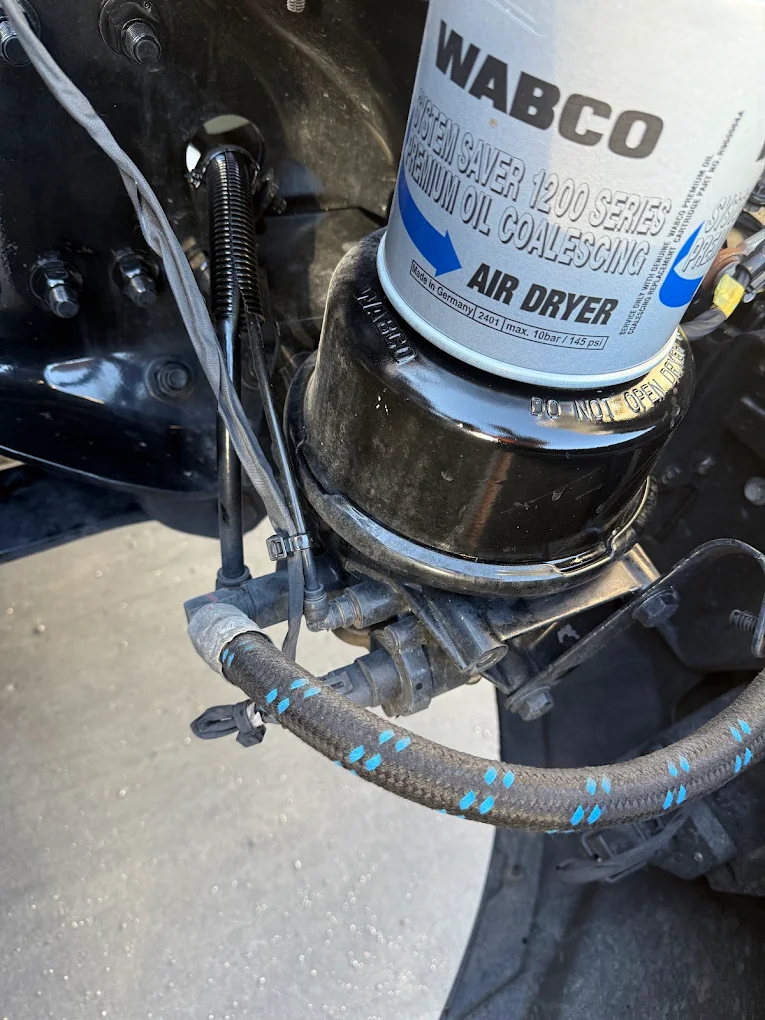
Roadside work requires more than a basic toolbox. Mobile repair equipment can include diagnostic tools, electrical testing equipment, tire service equipment, hand tools, air system tools, and other equipment suited to commercial vehicles.
Diagnostic equipment can help identify electronic faults that are difficult to locate through visual inspection alone. That is another reason to explain the problem before dispatch — a technician may need specific information to prepare for the call.
Some companies cut corners by guessing. Honestly, that can create more frustration. A proper diagnosis gives everyone a clearer starting point.
NWS-recorded Las Vegas high, July 2026
A disabled commercial vehicle can interrupt more than one trip — delivery schedules, driver hours, fleet planning and customer commitments. Heat adds another concern.
Don't stand unnecessarily close to traffic
Don't crawl under a vehicle on an unsafe shoulder
Don't attempt a repair you're not equipped for
Saving a little time is not worth creating a second problem.
Have a road service contact before something goes wrong
Owner operators know how quickly downtime becomes frustrating. Fleet managers face the same problem on a larger scale — one disabled vehicle can disrupt a schedule that involves several people.
Keep basic vehicle information available: truck number, vehicle type, trailer details and current location. It sounds simple. It helps.
After a roadside diagnosis, our truck repair service in Las Vegas covers the broader repair options in the shop.
Frequently asked questions
What is road service?
Road service provides assistance when a vehicle develops a problem away from a repair facility. It may include diagnosis, minor repairs, tire help, or other roadside assistance.
Can a semi truck be repaired on the roadside?
Sometimes. It depends on the problem, equipment, parts, and location. Major repairs may require towing or shop service.
How much does road service cost in Las Vegas?
It depends on the service call, distance, labor, parts, time, and repair complexity. Ask for pricing details before approving work.
Can road service help with a trailer?
Many commercial road service providers offer trailer assistance. Confirm the specific trailer services before dispatch.
What should I do if my truck breaks down on I-15?
Move to a safe location if possible, activate your hazard lights, and contact appropriate roadside assistance. Call 911 for an immediate emergency.
Does Nevada provide freeway roadside assistance?
Yes. NDOT operates a Freeway Service Patrol on regular Las Vegas area routes. It is not an on-call private repair service.
Can a mobile mechanic diagnose a diesel truck?
Depending on the provider and equipment, mobile technicians may diagnose many diesel and commercial vehicle problems at the breakdown location.
Is roadside repair better than towing?
Not always. If the problem can be safely repaired at the location, mobile service may avoid unnecessary towing. Some failures still require recovery.
What information should I give the technician?
Give the exact location, vehicle type, direction of travel, symptoms, warning messages, and whether the vehicle can move.
What should I check before a long Las Vegas trip?
Check tires, fluids, belts, hoses, battery condition, lights, and cooling system indicators. Address warning signs before starting a long run.
Need road service in Las Vegas?
Tell us what happened and where the truck is. From there, the right service option can be determined. No unnecessary promises. No guessing. Just a practical response when you need help.